The Nakasendo Trail is often remembered for its historic post towns, mountain paths, and beautifully preserved landscapes.
But sometimes, the deepest memories of a place are found not in its scenery, but in its food.
In the castle town of Iwamura, there is a small mochi shop that has been serving local people for more than 150 years.
Its name is Kankaraya.
The name is said to come from a small ornament once displayed in front of the house during the Edo period, producing a distinctive sound known as "kankara."
My parents were born and raised near Oi-juku, one of the post towns along the Nakasendo.
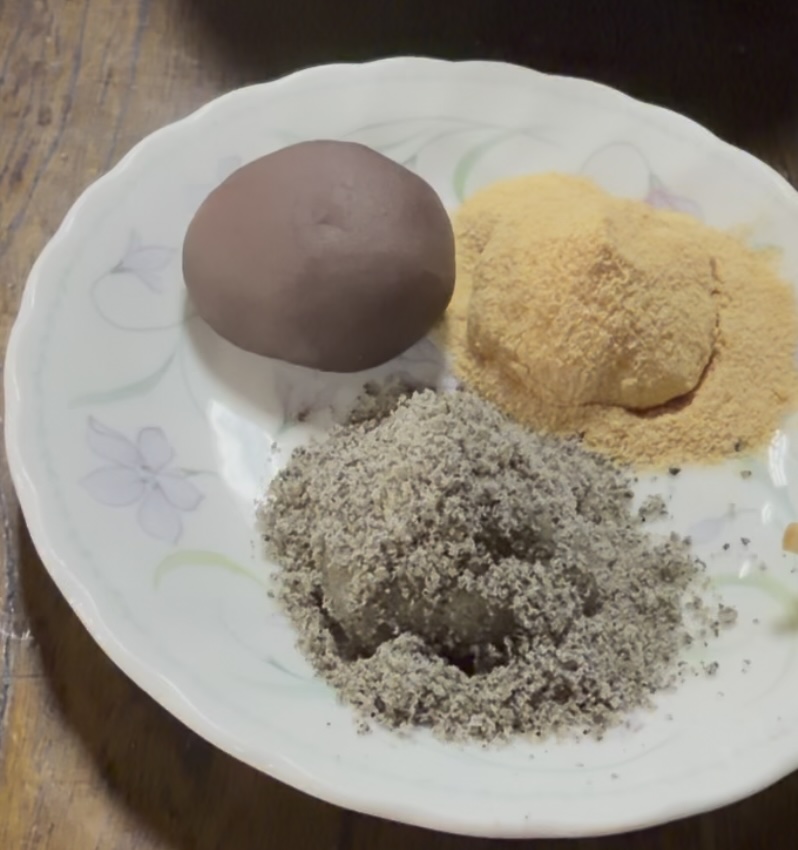
As children, they looked forward to visiting Kankaraya and eating its simple mochi sweets coated with sesame or kinako, roasted soybean powder.
There is nothing elaborate about them.
Soft steamed mochi, gently covered with natural ingredients.
That is all.
And yet, some of the most memorable foods are often the simplest.
Today, both of my parents are over ninety years old.
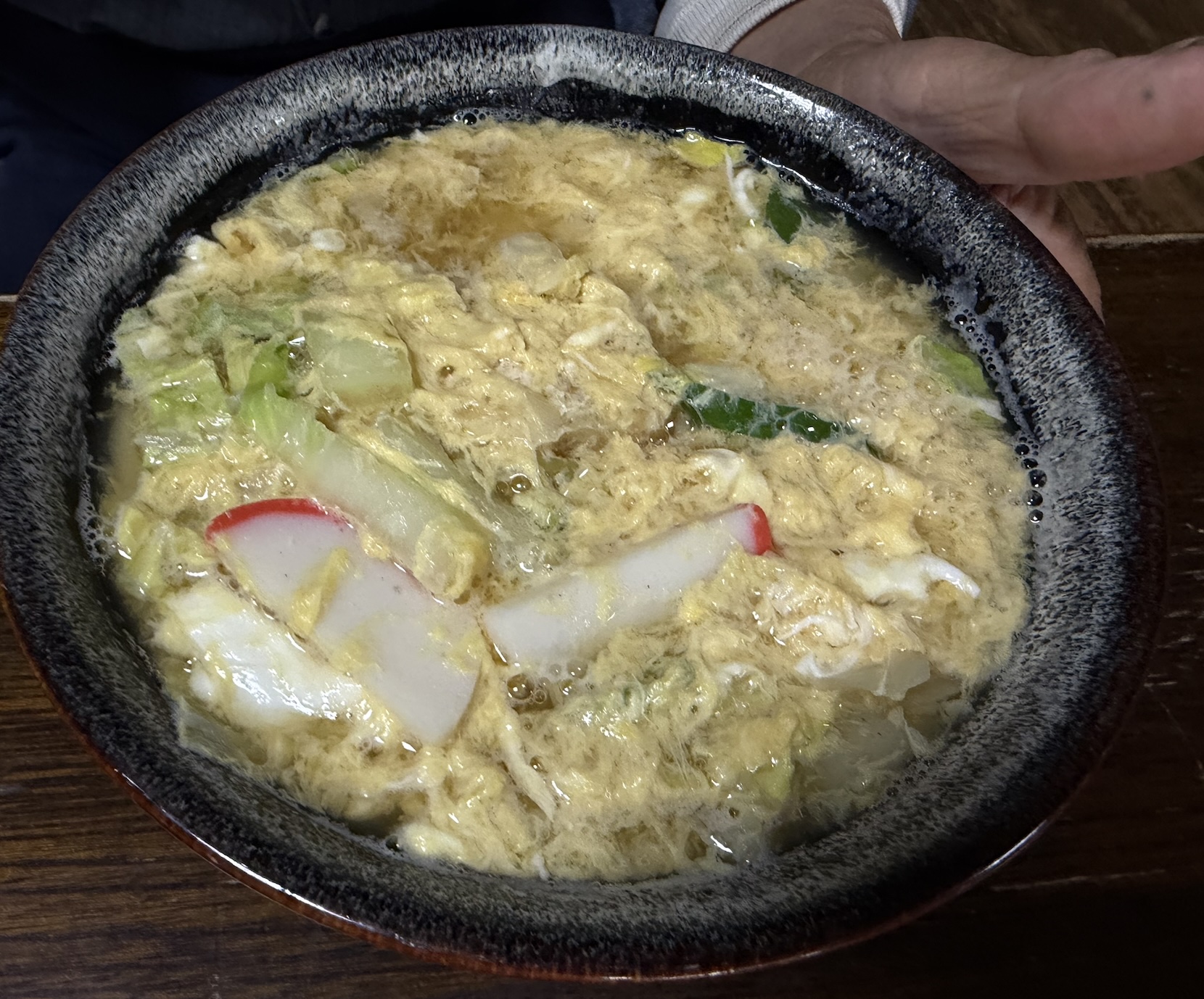
Even now, they still look forward to eating the mochi and udon served at Kankaraya.
Whenever we visit, my mother says the same thing.
There is no taste of artificial seasoning here.”
I understand exactly what she means.
People accustomed to modern processed flavors may find the food surprisingly mild.
But beneath that gentle taste lies something increasingly rare: the natural character of the ingredients themselves.
No strong seasoning is needed.
No flavor is forced.
The food simply tastes as it should.
Whenever I watch my parents enjoying their meal, I find myself wondering whether this way of eating has contributed, in some small way, to their health and vitality even after ninety years.
Of course, longevity has many causes.
Yet there is something reassuring about foods that have nourished generations without changing their essential character.
People often speak of cultural heritage in terms of temples, castles, or historic roads.
But food, too, is a form of heritage.
Perhaps food culture is simply this:
A child enjoys a simple sweet.
Decades later, that child returns as an old man or woman and finds the same taste waiting.
Few things connect past and present so effortlessly.
Kankaraya may not appear in many guidebooks.
It is not famous throughout Japan.
Yet for local families, it holds something more valuable than fame.
It preserves memory.
And through those memories, it quietly preserves culture itself.
As for me, sesame-coated mochi has always been my favorite.
Kinako is wonderful as well, but the rich aroma of roasted sesame wins every time.