Kiso Lacquerware
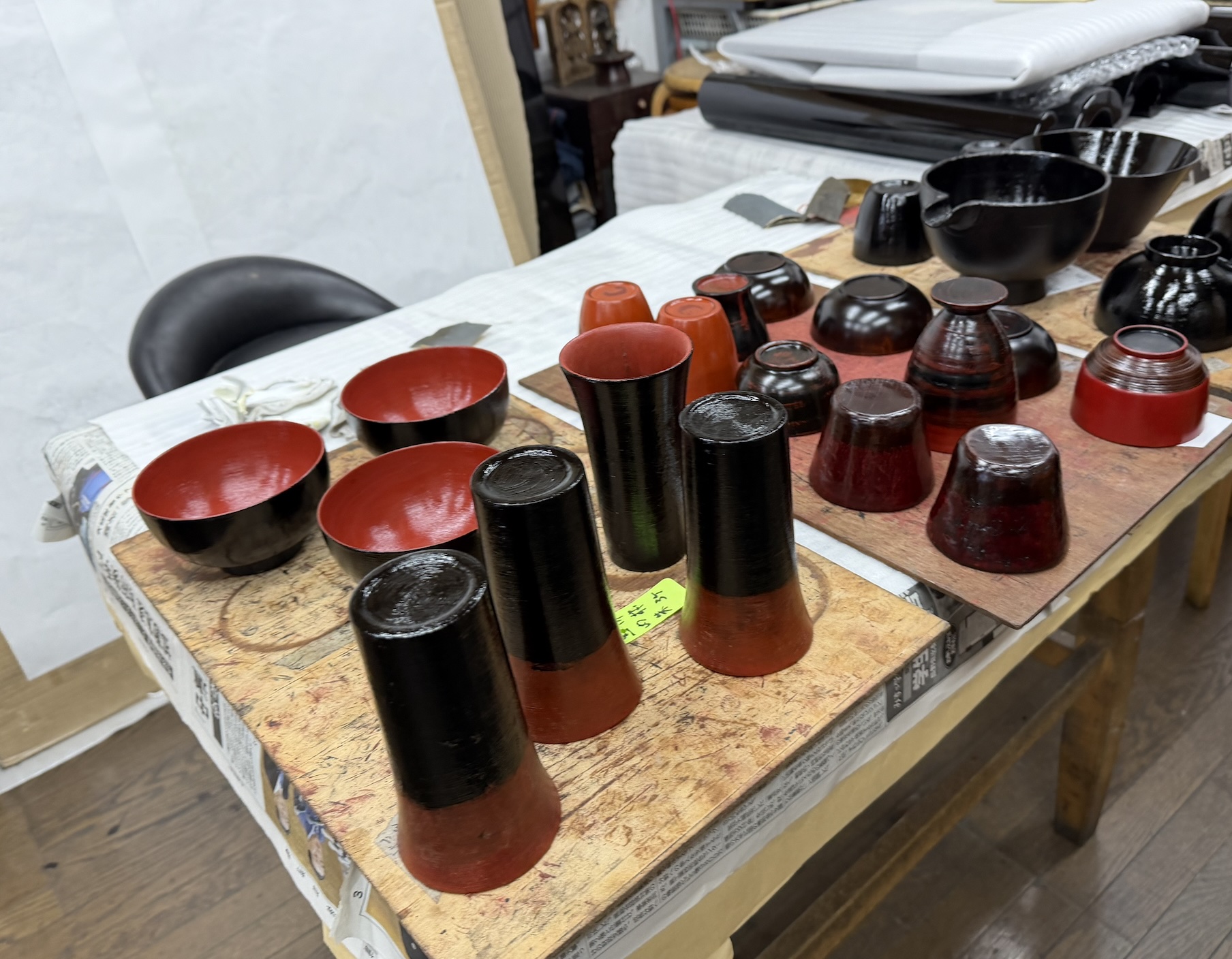
The Kiso Valley is surrounded by deep mountains. There is little flat land for rice fields or farms, and the climate is cool. For the people who lived here in the past, it was not easy to support themselves through farming alone.
On the other hand, the Kiso Valley has long been blessed with excellent timber.
The five trees that best represent Kiso are Japanese cypress, sawara cypress, asunaro, nezuko, and koyamaki. Together, they are known as the Kiso Goboku, or the “Five Sacred Trees of Kiso.”
During the Edo period, the forests of Kiso were controlled by the Owari Domain. To protect these valuable forests, the domain placed strict limits on cutting these five kinds of trees.
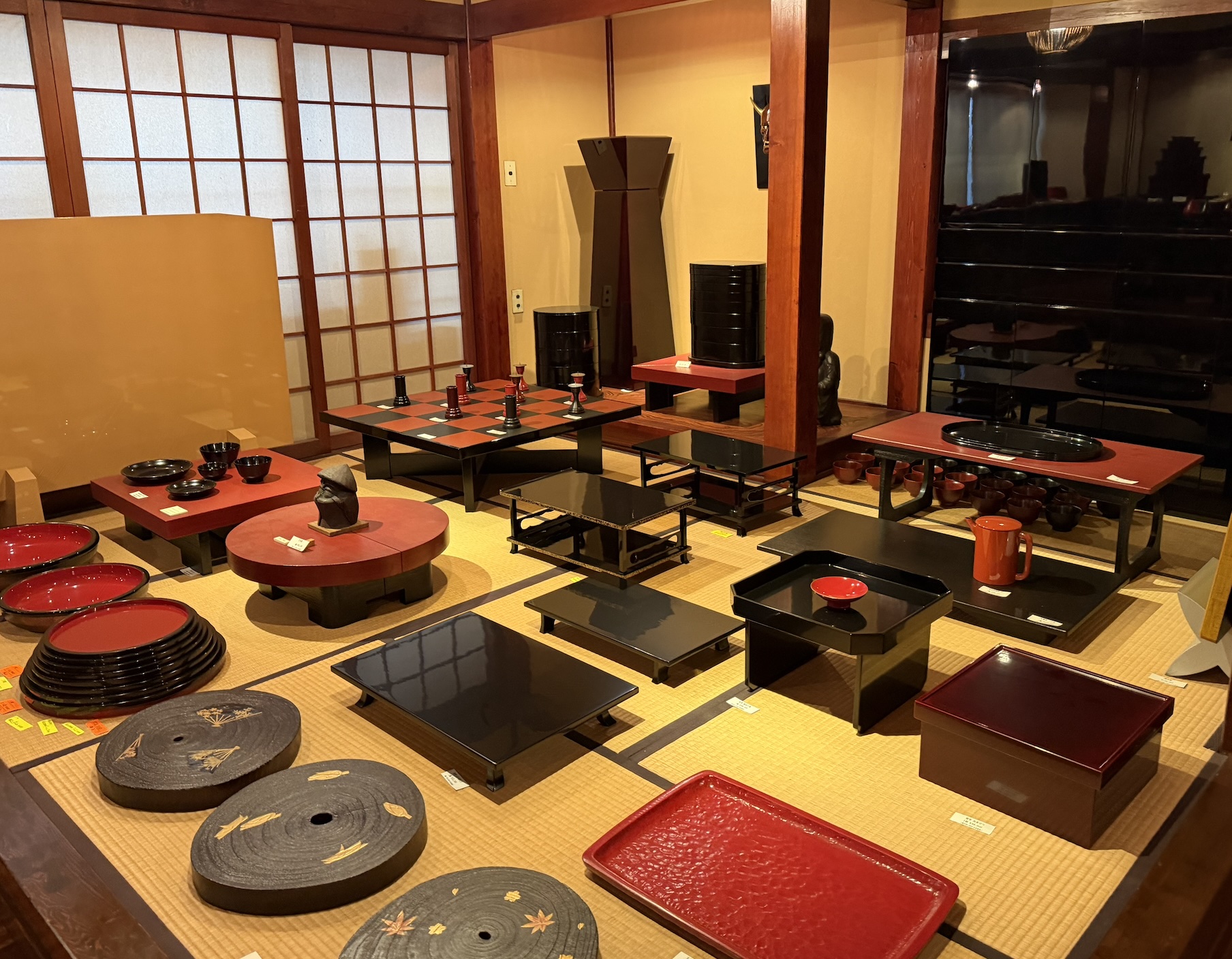
Because farming alone was difficult, the people of Kiso used the rich forest resources around them. They made wooden containers, combs, lacquerware, and many other useful objects to support their lives.
Kiso lacquerware is said to have begun when people applied lacquer to wooden objects to make them stronger and last longer. The humid climate of Kiso was also well suited to drying and hardening lacquer.
Today, Kiso-Hirasawa is the best-known center of Kiso lacquerware. During the Edo period, it developed into the most important lacquerware town along the Nakasendo. Lacquer craftsmen also worked in Kiso-Fukushima. Yabuhara, meanwhile, became better known for wooden crafts, especially the traditional Oroku-gushi comb.
In the early Meiji period, a high-quality, iron-rich clay called sabitsuchi was discovered near Narai. Craftsmen mixed this clay with lacquer and used it as a base layer. This made the surface smoother and the finished lacquerware stronger. The discovery helped Kiso lacquerware develop even further.
In the past, Kiso lacquerware was valued as an inexpensive and durable part of everyday life. It was also popular as a souvenir among travelers walking the Nakasendo.
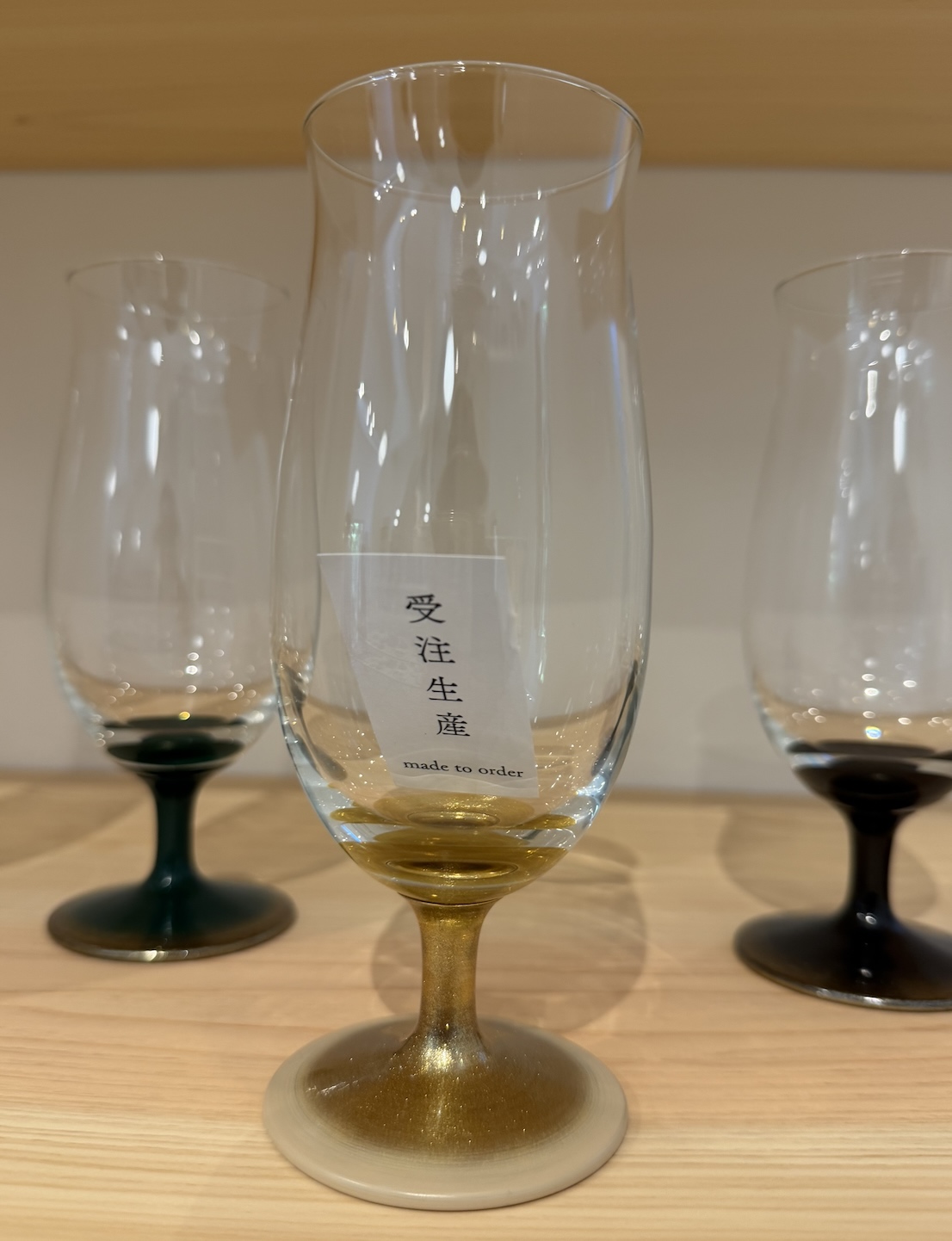
Today, the tradition continues in many new forms. Craftspeople still make traditional bowls, dishes, and furniture, but they also create decorative objects and works of art. Some artists now apply lacquer not only to wood but also to materials such as glass, producing beautiful works that bring this old tradition into modern life.