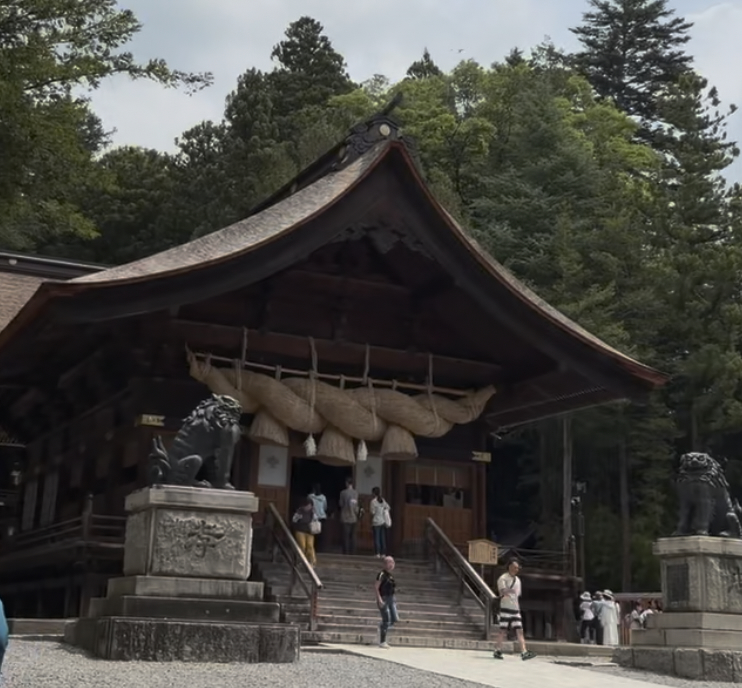
Shimosuwa is a fascinating town when viewed through the history of sankin-kotai, the system under which feudal lords generally alternated their residence between their domains and Edo each year. Their journeys created large processions of daimyo and retainers along Japan’s major highways.
Located near Lake Suwa, Shimosuwa developed as a Nakasendo post town, a gateway to Suwa Taisha’s Akimiya Shrine, and a hot-spring resort. Natural hot-spring water still flows here today, and the town retains much of its historic atmosphere.
Near Akimiya Shrine is a T-junction facing Chosenkaku Kameya. From here, travellers could reach Edo by either the Koshu Kaido through Kofu or the Nakasendo over Wada Pass. Both routes were approximately 210 to 220 kilometres long.
On a modern map, the Koshu Kaido appears much easier because it avoided Wada and Usui passes. Indeed, the Takashima, Takato and Iida domains used it for their sankin-kotai journeys.
Many other domains, however, were assigned the Nakasendo and had to cross its difficult mountain passes. Why were they not allowed to take the apparently easier route?
Local people and historians offered me three possible explanations.
Each explanation sounds plausible. However, we should distinguish between what historical records clearly establish and interpretations that developed later. What do you think?