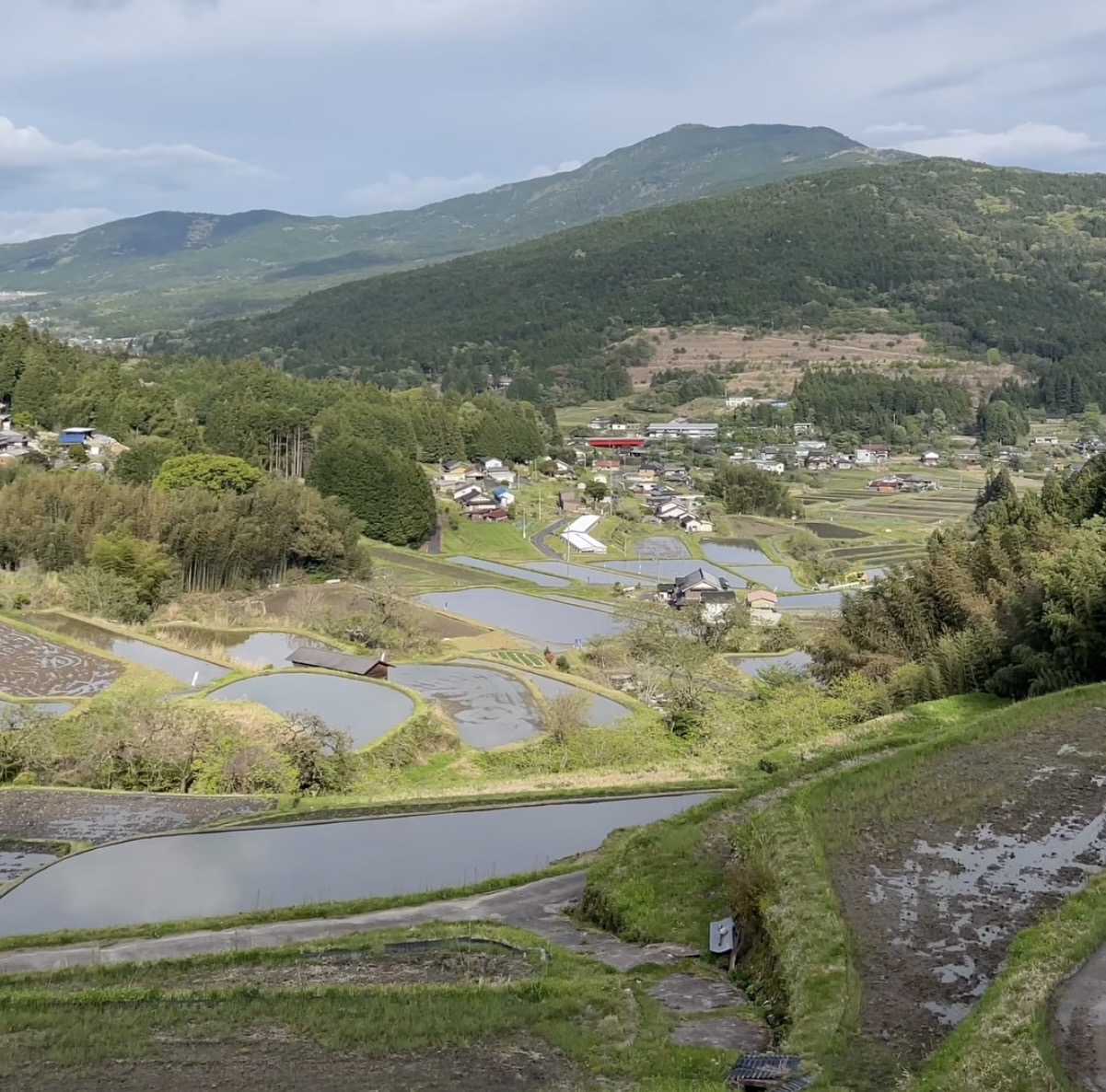
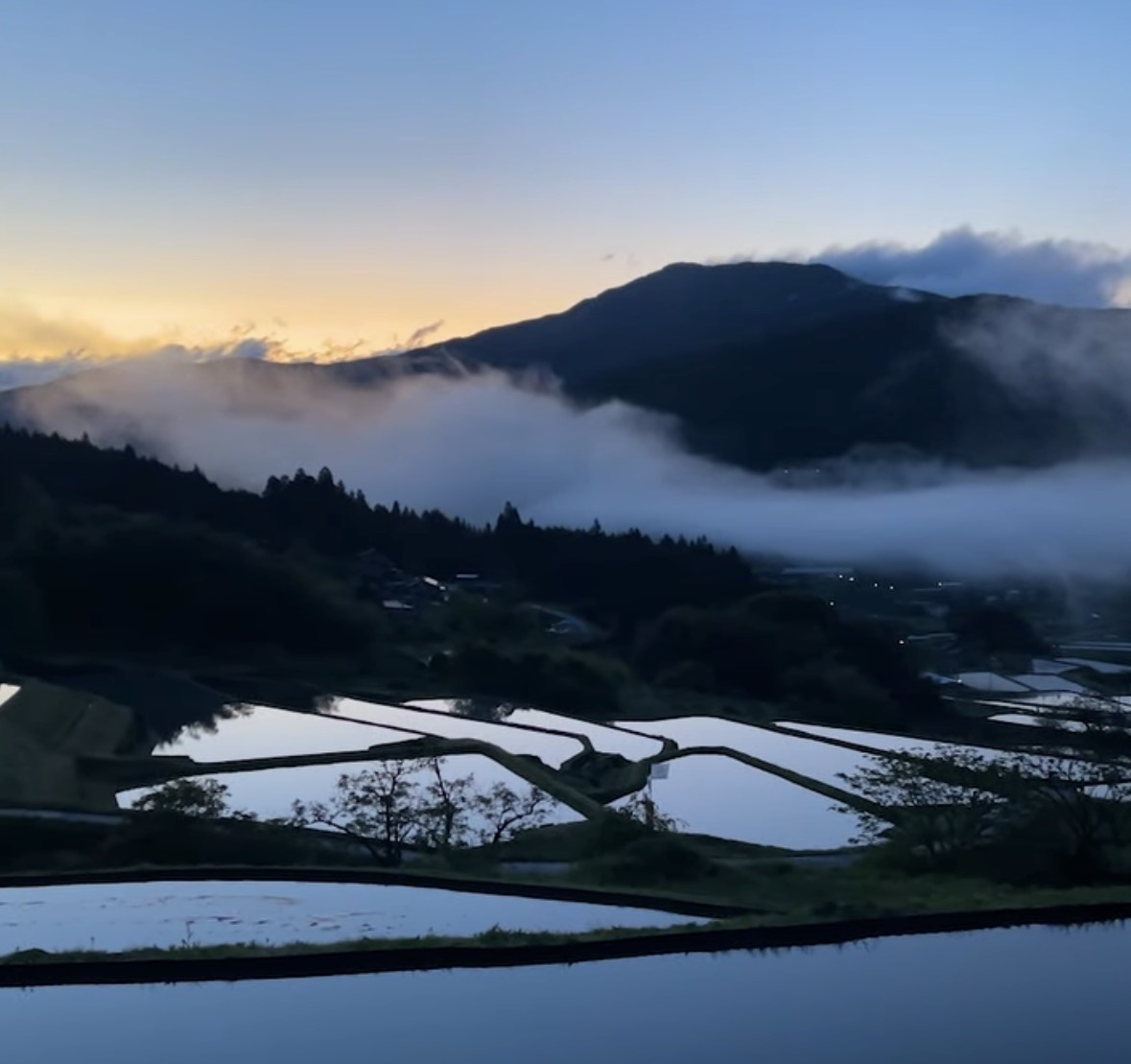
The rice terraces found along the Nakasendo are undeniably beautiful. Their beauty is at its height during the rice-planting season, when the fields are filled with water and newly planted rice.
At night, the moon is reflected in each terrace, while the distant lights of mountain villages shimmer softly beyond. It is a breathtaking scene, often described as one of Japan’s original landscapes.
I do not wish to deny that beauty. Yet, having been born and raised in these mountains, I cannot look upon the rice terraces as scenery alone.
For generations, farmers carved fields into steep mountainsides, building stone walls by hand and shaping each terrace one by one. The labor required must have been almost unimaginable.
In Japan, for centuries, abundant rice was more than food. It was the very foundation of prosperity. For those living in narrow mountain valleys, the creation of rice terraces was not merely agricultural work. It was a struggle to sustain life within the limits of the land.
These terraces are therefore not simply beautiful landscapes. They quietly preserve the history of farmers who worked with patience, endurance, and determination in places where flat land was scarce.
To me, the rice terraces are not simply landscapes to be admired.
They are silent reminders of the countless lives, hardships, and quiet determination that shaped rural Japan over centuries.